

.png)
.png)
.png)
.png)
.png)
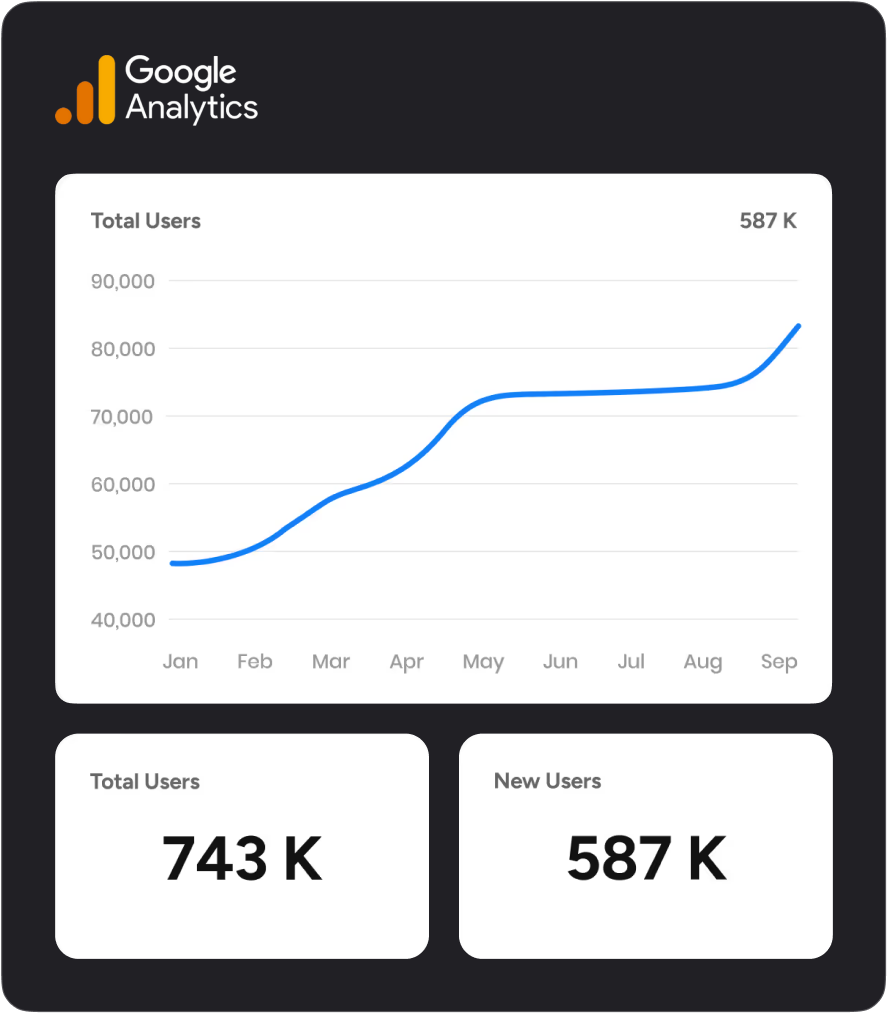
The average website loses 20-30% of its organic traffic after a migration. That's not just a statistic—it's lost revenue, leads, and momentum that can take months to recover.
We've developed a meticulous technical process that safeguards your search visibility during complex transitions. From comprehensive pre-migration audits to strategic redirect mapping and post-launch monitoring, our approach ensures your lead generation maintains and then improves.
We deliver technical SEO insights that create real business impact:
Even the best content can't rank if search engines and AI can't find, understand, and index it properly. We systematically identify technical barriers that prevent your pages from reaching their ranking potential, from canonical issues to orphaned content and structured data opportunities.
Speed isn't just about user experience, it's a critical ranking factor. Our performance analysis process identifies the exact issues holding your site back, from image optimization opportunities to code inefficiencies. We provide a comprehensive report with prioritized recommendations for your development team to implement, resulting in faster pages that rank better and convert higher.
Website migrations represent one of the highest-risk moments for your SEO performance. Our tried-and-tested migration methodology has successfully preserved rankings through platform changes, redesigns, and domain consolidations for enterprise clients. We've seen it all—and know exactly how to guide you safely through the process.
.png)
Increase in form submissions

Increase in organic traffic
.png)
Increase in quote requests
We've managed over 100 website migrations from an SEO perspective and know how to do it: safely, at scale, and with results.
Schedule a call today to discuss how our technical SEO team can strengthen your site's foundation and preserve your hard-earned rankings during critical transitions.


Organic keywords ranking in the top 3 search results
Increase in organic keywords
Marketing Lead, Billhighway

Understanding your core business offerings and the keywords around those services is the first step to prioritizing technical fixes. Once we understand the targets, we can improve the meta descriptions and title tags, implement schema, enhance internal linking, and generally improve the entire page structure to make a significant impact on organic rankings and traffic.
Duplicate content issues with keyword cannibalization can take down even the most well-designed websites. We identify and highlight these issues early on in our process and develop a strategy to address the duplicate content with fresh keyphrase targets and content.
The simplest answer to this is, the earlier the better. As much time as our team can have to help plan and map out the site migration as possible is helpful, but rule of thumb is at least two months of lead time to ensure things migrate smoothly.
URL redirection is determined by which URLs will be changing when the new site launches. If a URL is changing, the old URL needs to be redirected to the new one upon site launch, and any internal links to the old URL need to be updated to the new one. Migration is also a great time to prune content, so any URL not being carried to the new site needs to have a redirect target, even if it’s just to the home page.
There’s no way to actually test the redirects before a migration, but there are ways to run crawls on the testing environment and fully plan out the migration path. This is the best way to mitigate risk from the migration.
We treat traffic drops after migrations like planned scenarios, not surprises. We proactively monitor crawl data, rankings, and redirects. If any issues come up, we diagnose fast, prioritize fixes, and adapt quickly. And most importantly, we keep you informed every step of the way.
Technical SEO focuses on how well your website is built for search engines to crawl, index, and rank your content. This includes factors like site speed, mobile usability, structured data, XML sitemaps, and secure connections (HTTPS). Unlike content SEO, which deals with what’s on the page, technical SEO is all about how the site is built and functions under the hood.